

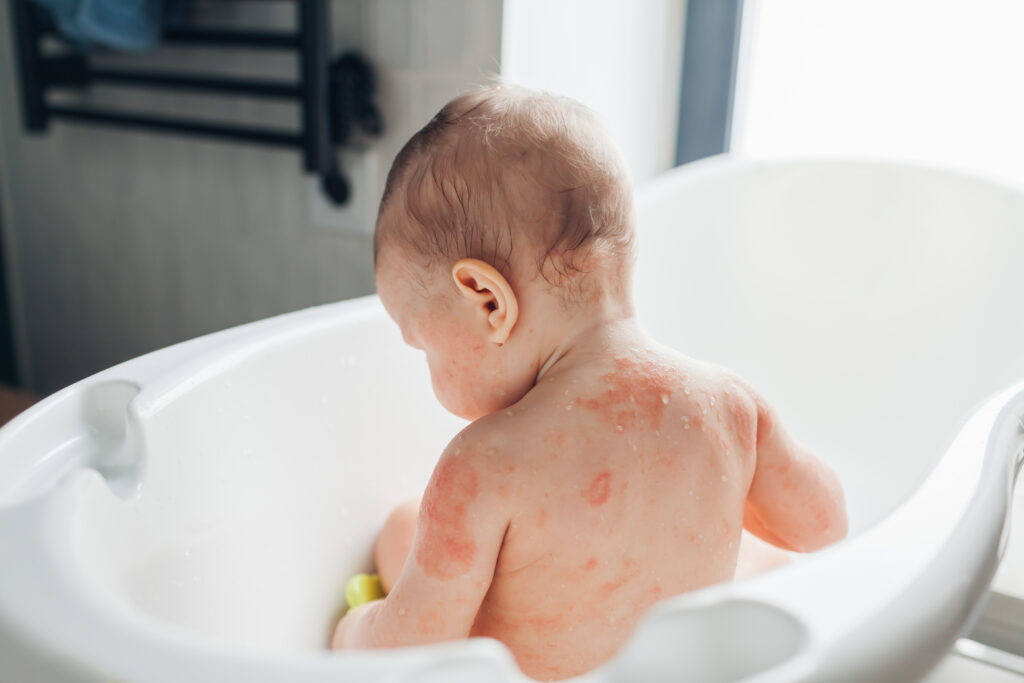
A newborn’s skin changes constantly in the first few months. One week you might notice a scatter of small bumps across your baby’s cheeks. The next, a blotchy patch shows up on their chest or scalp. For parents, it can be stressful not knowing what’s going on.
This guide will walk you through some of the most common neonatal skin conditions. You’ll learn the differences between baby acne vs rash, what typically causes each and how to build a healthy newborn skin care routine. You’ll also find guidance on when newborn skin conditions do call for a closer look from a medical provider.
Baby (neonatal) acne appears as small red or white bumps, usually clustered on the cheeks, nose and forehead. About 20 percent of newborns develop it, usually between two and four weeks of age. It’s generally a temporary condition that resolves on its own and leaves no permanent damage to your baby’s skin.
When it comes to baby acne causes, we don’t have a definitive list. Like adolescent acne, hormones are the likely culprit. Hormones that cross the placenta before birth, along with a newborn’s own hormone production in the first weeks of life, can increase oil production in the skin and clog pores. Because these hormones include testosterone, baby acne appears somewhat more often in boys than in girls. A newborn’s skin is also more reactive to residue from lotions, spit-up or saliva left on the skin.
For most babies, neonatal acne clears up within a few weeks to about three months with regular, gentle cleansing. Minimize other interventions; scrubbing, popping or applying acne treatments made for older kids or adults will do more harm than good.
If your child’s acne first appears when they’re older than three months, a medical evaluation is appropriate. This is a separate condition that can leave permanent scars if left untreated.
Baby acne doesn’t normally blister or ooze, and it shouldn’t spread past the upper chest. These are signs that you may not be looking at something on the opposite side of the baby acne vs rash spectrum.
Differentiating baby acne from the many conditions under the umbrella term “rash” can be difficult. Symptoms of baby rashes can be similar, with only slight differences in appearance, duration and treatment. And because baby skin changes so much in early life, a rash can even change appearance over time! Here are some of the most common infant skin rashes to help you make an informed diagnosis and begin treating your baby’s skin appropriately.
More than half of full-term newborns develop erythema toxicum, or ETN, typically within the first few days of life. It looks like blotchy red patches dotted with small bumps, sometimes with a center that contains fluid. It can appear on your baby’s face, trunk, arms or legs. While it can look alarming, it generally clears up within a week without any treatment at all.
Milia are tiny white bumps that many people mistake for baby acne. These bumps are caused by dead skin cells trapped just under the surface of your baby’s skin rather than by hormones or oil. They usually appear around the nose, chin and cheeks in newborns from birth to a couple of weeks old. The bumps tend to be flatter and smaller than baby acne and don’t have whiteheads. While roughly half of newborns have milia, they clear up within a few weeks without treatment.
Heat rash happens when sweat becomes trapped beneath the skin, most often on the neck, chest, shoulders and creases like the armpits and elbows. It’s especially common in babies and young children, whose sweat ducts are still maturing. Sometimes it looks like tiny, clear, fluid-filled bumps that don’t seem to bother your baby at all. Other times it’s small, inflamed bumps that look irritated or prickly. Either version tends to fade once your baby cools down and the sweat has a chance to evaporate.
Cradle cap — greasy, yellowish scales on the scalp — affects about 70 percent of babies by three months old. It’s not itchy or bothersome to most babies and typically resolves within the first year with regular, gentle shampooing.
Contact dermatitis is your baby’s skin reacting to something it touched. A new detergent, fragranced lotion, drool or even a scratchy fabric tag can set it off. Less often, true allergies to substances like latex, certain metals or specific skincare ingredients are behind it. Unlike baby acne or erythema toxicum, this rash tends to stay confined to where the irritant touched the skin, which can help you track down the cause. Removing the suspected irritant is usually enough to see improvement within a few days.
With so many overlapping conditions, how do you tell a routine breakout from something you should have evaluated? Visual cues, timing and context will help you narrow down your baby’s condition.
Note that irritation can look different depending on skin tone. On lighter skin, irritated areas often look pink or red; on deeper skin tones, it may look more purple, brown or simply darker than the surrounding skin. Good, consistent lighting in your photos makes it easier for you to track real changes over time.
When a skin change appears matters almost as much as what it looks like when differentiating baby acne and rashes. A rash in the first few days of life points toward something like erythema toxicum. A cluster of bumps that shows up closer to the two-to-four-week mark is more consistent with baby acne. And a rash that appears only after a change, like a new detergent, a hot afternoon or a switch in formula, often points to an environmental trigger rather than a developmental one.
Putting visual characteristics together with timing and context can help you pinpoint the condition with which you’re dealing. Here’s a side-by-side look at baby acne vs rash:
| Condition | Appearance | Location | Age at Onset | Texture | Duration | Visual ID (click to enlarge) |
| Baby Acne | Small red or white bumps, sometimes with a whitehead. | Cheeks, nose, forehead, sometimes chin or scalp. | 2 to 4 weeks after birth. | Firm, dry to the touch. | Several weeks to a few months. | 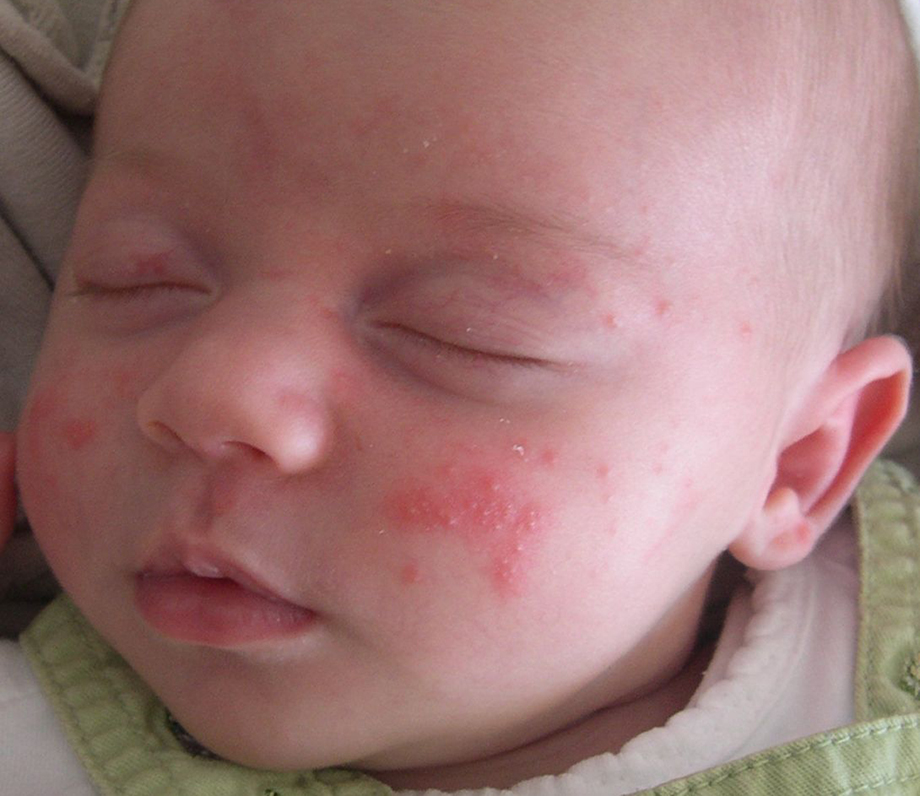 |
| Erythema Toxicum (ETN) | Blotchy red patches with small bumps, occasionally fluid-filled. | Face, chest, arms and legs; rarely palms or soles. | First few days after birth. | Smooth, with small nodules. | 5 to 15 days | 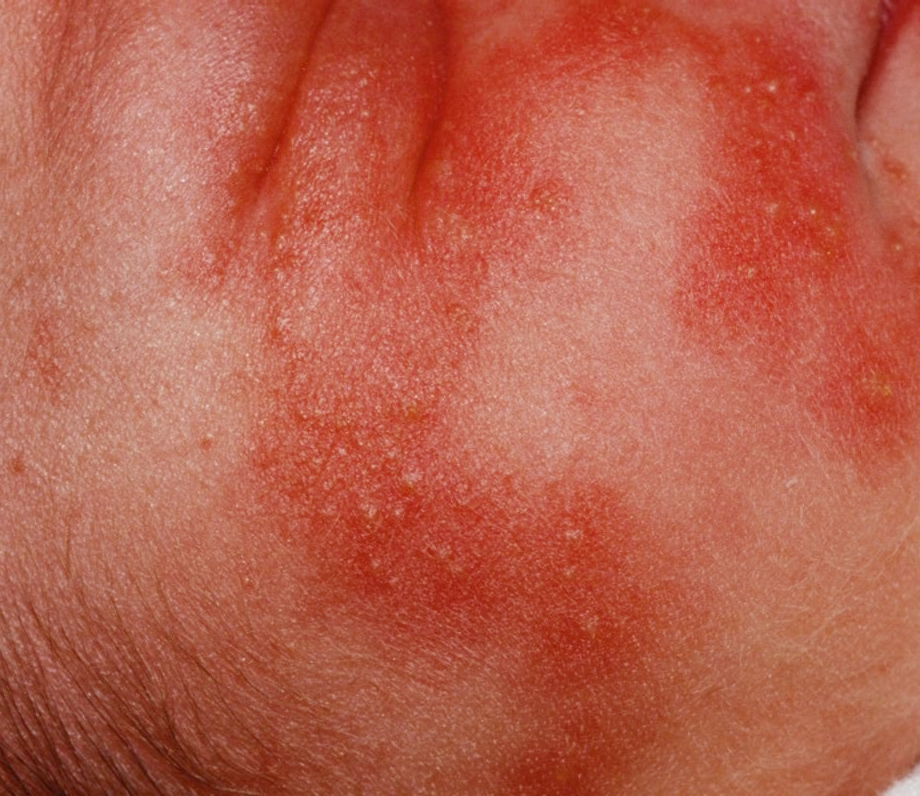 |
| Milia (Milk Spots) | Tiny white or yellowish bumps. | Face; less commonly on scamp, chest or inside the mouth. | Birth to a few weeks old. | Firm, smooth and round like tiny, hard pearls. | A few weeks in newborns up to a few months in older children. | 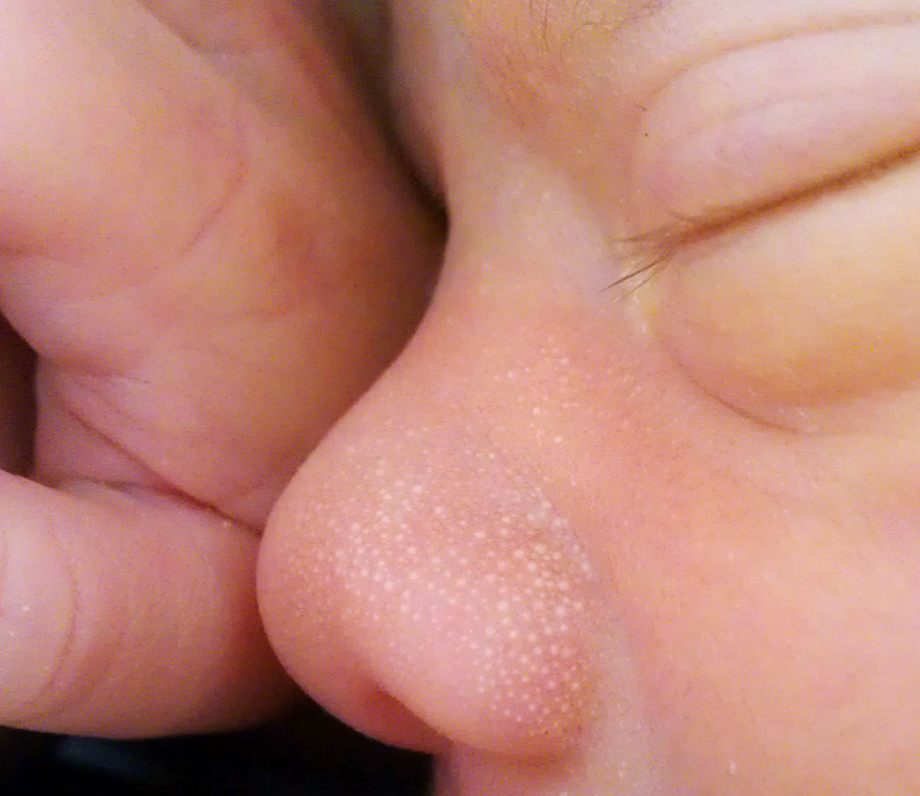 |
| Heat Rash (Prickly Heat) | Small, inflamed blisters or clear bumps; may itch or burn. | Neck, shoulders, chest, armpits, elbow creases and groin. | 1 to 3 weeks after birth. | Rough or prickly. | 1 to 3 days. | 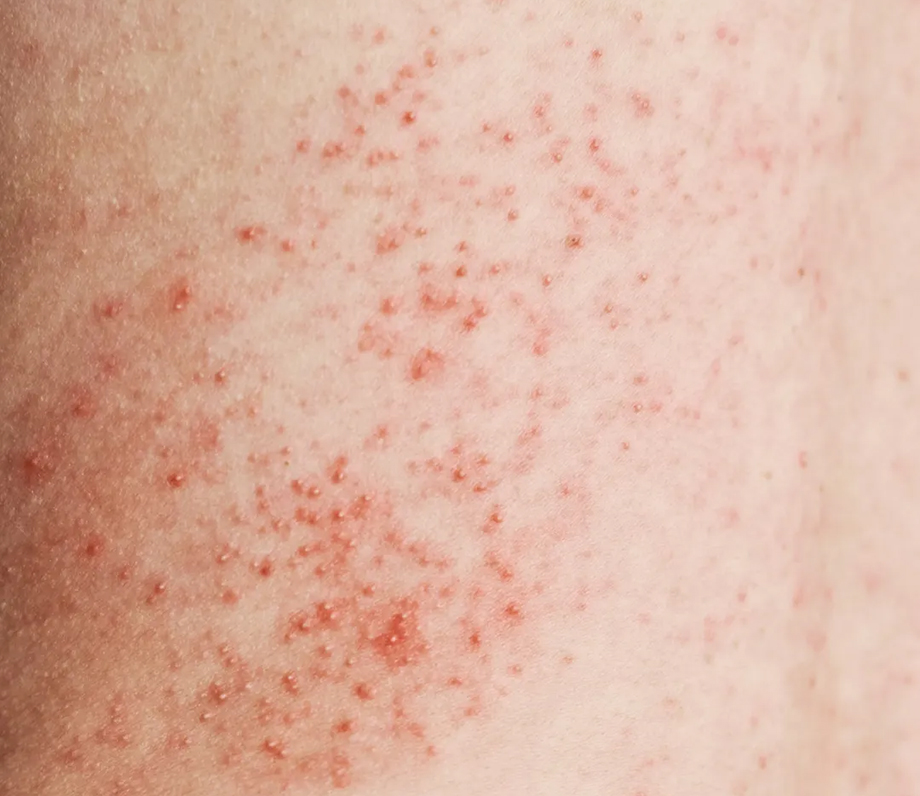 |
| Seborrheic Dermatitis (Cradle Cap) | White or yellowish flaky or scaly patches. | Scalp; rarely on ears, eyelids, nose and groin. | 2 weeks after birth to 1 year old. | Crusty, greasy, waxy or dry and flaky. | A few weeks to a few months. | 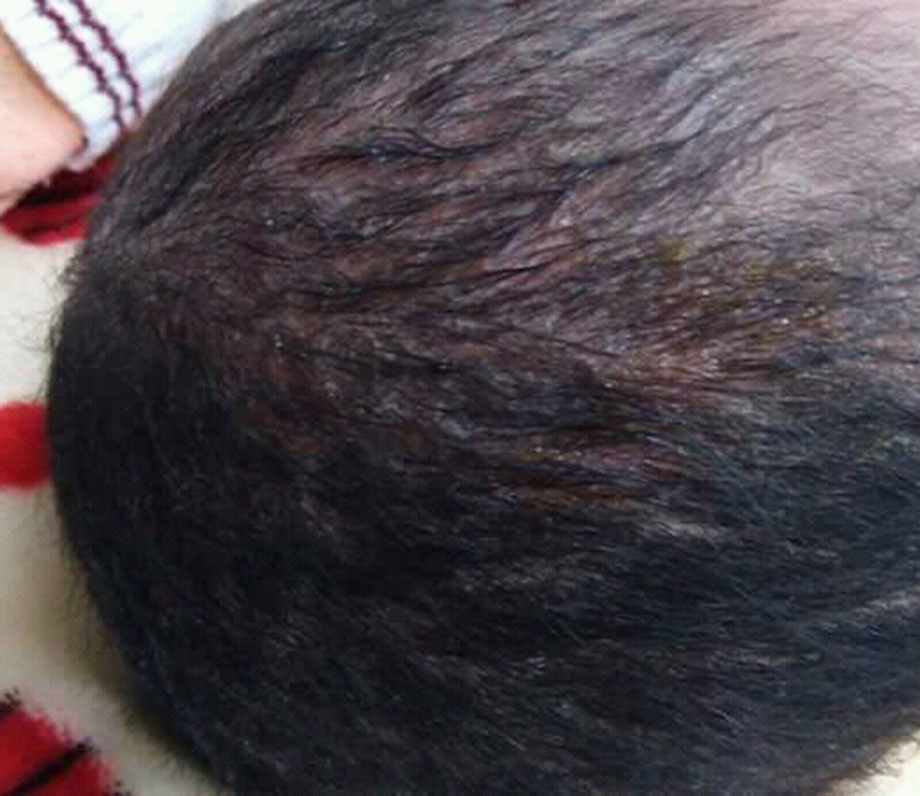 |
Whether you’re dealing with common newborn skin issues or just want to keep your baby’s skin soft and clear, a simple and consistent neonatal skin care routine is essential. The backbone of such a routine is simply gentle cleaning and regular skin checks.
Being consistent and only introducing new products one at a time makes it much easier to identify what’s helping and what might be causing irritation. You can also ask your pediatrician’s office for product recommendations. They often have samples you can test out before buying full-size bottles.
Most common newborn skin issues will resolve without intervention, but if baby acne or a rash aren’t behaving normally, it’s time to see a medical provider. Here are some signs your baby’s acne or rash may need professional evaluation:
It’s possible your baby’s condition is something different or more serious than you thought, in which case a visit to your pediatrician or urgent care can intervene to prevent long-term damage.
Visit the hospital emergency room if you notice a skin change alongside fever, unusual sleepiness, difficulty waking or poor feeding. These combinations can point to something beyond a routine newborn rash. The same goes for a rash that’s spreading quickly or causing visible discomfort.
Whether you visit your pediatrician, urgent care, the emergency room or are referred to a pediatric dermatology practice, you’ll get the most out of your appointment if you have the following information.
Not every newborn skin condition comes down to hormones or a single irritant. Environment and family history both play a supporting role.
Along the Gulf Coast, heat and humidity are near-constant companions for much of the year. Both can cause heat rash or exacerbate other skin irritations. Overdressing your baby, even with good intentions on a cooler evening, raises the odds of trapped sweat and irritated skin. Lightweight, breathable cotton layers and a cool, well-ventilated room go further here than in drier climates. Hard water, chlorine from a pool and everyday household allergens like pet dander or dust can also play a role in causing infant skin problems.
Humidity swings during storm season can add another layer to this. Power outages that knock out air conditioning or extended time indoors during storms can shift the conditions your baby’s skin is used to fairly quickly. Keeping a small stock of your baby’s usual cleansers and a battery-powered fan on hand isn’t a bad idea heading into the warmer months.
Family history matters most for eczema, which is different from the newborn rashes we’ve covered but can be hard to differentiate. A family history of eczema, asthma or seasonal allergies raises a baby’s likelihood of developing the same condition. And roughly 60 percent of children who develop eczema show signs within their first year. Unlike baby acne or erythema toxicum, eczema tends to cause dry, itchy, sometimes scaly patches that can flare up repeatedly rather than resolving on a predictable timeline. If your baby is experiencing this, mention it to your baby’s provider.
It’s also important to remember that while genetic influences on skin are a factor to consider, a family history of a condition does not mean your baby will absolutely inherit it. Plenty of babies with no family history develop eczema, and plenty with a strong family history never do. It simply means that mentioning your own or your partner’s family history of eczema, asthma or allergies gives your baby’s provider useful context if a persistent rash appears.
Baby acne and newborn rashes share a lot of surface-level similarities, but the timing, texture and location of what you’re seeing usually point toward an answer. Most of these conditions are common, temporary and resolve with little more than gentle, consistent care. When something doesn’t fit the pattern, or your baby seems uncomfortable, a medical provider can help you sort out exactly what you’re dealing with and how to help.
If you’re ever unsure about a change in your baby’s skin, Coastal Urgent Care is here to help you figure out what’s going on. Walk in or book online to find the clinic nearest to you.
Identify baby acne by small, isolated bumps on the face, often developing in the second week post-birth, versus a rash that may be more widespread or have differing textures.
Gently cleanse the affected area with mild soap and water, avoiding oily lotions; patience is key as baby acne usually resolves on its own within a few months.
Breastmilk is sometimes touted for its healing properties, but results can vary. Consult a pediatrician for personalized advice.
Baby acne and most newborn rashes stay confined to the skin. A milk allergy typically comes with additional symptoms beyond the skin, such as vomiting, diarrhea, wheezing or noticeable discomfort after feeding.
This article is for general educational purposes and isn’t a substitute for medical advice from your baby’s healthcare provider. Every baby is different, and a provider who can examine your baby is best positioned to make a diagnosis.